
Welcome to Our Online Homeopathic Clinic
Do you have a health issue and are you looking for best homeopathic doctor in Lahore? Contact us now.
Homeopathy can do far more than what it is commonly known for. While it is very effective for chronic diseases, it can give wonderful results even in acute cases. Homeopathic medicines for all diseases are very effective, safe and can successfully treat many diseases without surgery.
- Acne
- Allergies
- Anxiety and Depression
- Arthritis
- Asthma
- Blood Pressure
- Cancer-Tumors
- Cholera
- Constipation
- Cramps
- Dandruff
- Dengue Fever
- Diplopia
- Endometritis
- Freckles
- Hair Loss, Alopecia
- Heart Diseases
- Hematuria, Burning of Urethra
- Hemorrhoids (Piles)
- Hepatitis
- High Blood Pressure (Hypertension)
- Kidney Stones (Renal Calculii
- Low Blood Pressure (Hypotension)
- Irritable Bowel Syndrome (IBS)
- Kidney Stones
- Migraine
- Obesity (Weightloss)
- Typhoid Fever
- Urinary Tract Infection (UTI)
- Uterine Fibroids
- Vertigo
- Vitiligo (Leucoderma)
- Warts
Hematuria
Hematuria (passing blood with urine) and burning of urethra can also be easily and quickly healed and restoring normal kidney functions. Burning can occur before, during or after urination. All those conditions can be effectively and quickly cured. Our homeopathic clinic has the skill to do it – we have done it.
Kidney Stones
Kidney stones are of several types and more than one stone varying in size and shape can exist at the same time. Homeopathic medicines can easily remove kidney stones without causing any damage to the kidneys. Homeopathy is known for it. However special technique is required to remove stones larger than the size of urethra so that they don’t get stuck in urethra. We know how to do it.
Kidney Failure
When kidneys do not filter out toxins, Blood Urea Nitrogen (BUN) and Creatinine dangerously may rise above normal limits which condition is called renal failure. Treatment of this condition is one of our specialties. Blood Urea Nitrogen (BUN) and Creatinine can be quickly and effectively brought down and normal kidney function can be restored. We have several successful cases to our credit. No more kidney complaints.
Hemorrhoids (Piles)
Hemorrhoids can be internal (inside the anus), external (outside and around the anus) or combination of both. Those may also be categorized as bleeding or blind (non-bleeding) hemorrhoids. One can choose surgery for treatment but surgery does not remove the cause. Homeopathic medicines can effectively cure all types of piles painlessly along with cure of the cause. No surgery required.
Freckles
Freckles are flat, irregular spots that develop randomly on the skin, particularly on the cheeks. They can vary in color and density but are always darker than the normal skin around them. They are more prominent in persons of fair complexion and have great cosmetic value particularly if they are on the cheeks. Homeopathic treatment can effectively cure all types of freckles especially in young women.
Uterine Fibroids
This condition can result in heavy blood loss and lead to anemia, general weakness and various other problems. Uterine fibroids can be completely removed with homeopathic medicines, without surgery. Homeopathic remedies are also capable of treating several other problems related with gynecology. At our clinic, we have frequently and successfully treated various female diseases including polycystic ovaries.
Vitiligo (Leucoderma)
It is a skin related disease also known as “leucoderma”, which means white skin. Vitiligo is a common disorder of depigmentation, which occurs due to retarded production of melanin in the skin. It appears as white patches. If left untreated, white patches start expanding and becoming prominent and new patches start developing. Gradually almost whole skin becomes white but there is no formation of scales over them.
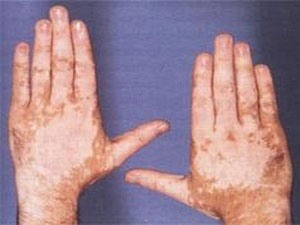
Homeopathic Treatment of Vitiligo (Leucoderma)
The very first and valid question is, “Is vitiligo curable”? The answer is “YES, it is curable” through homeopathy. Homeopathy has its own philosophy and way of treatment. The system does not look at vitiligo as local disorder limited to the skin, to be treated externally like cuts, wounds or burns etc. Homeopathic treatment is based on complete analysis of individual symptoms considering the person as a whole. Medicines chosen after complete case taking according to correct procedure of homeopathy automatically takes care of the underlying cause and permanently cures vitiligo.
For lots of people it is hard to believe that when modern medical science has no cure for vitiligo, how homeopathy can cure it but the fact is that it can. We know how to effectively treat vitiligo. We have done in many cases. Consult us today.
Hair Loss, Alopecia
Hair loss is a very common condition now a days in both men and women. Homeopathy deals with this condition very effectively, with homeopathic treatment hair loss can be cured and reversed as well.
Hypertension and Hypotension
Hypertension means high blood pressure and hypotension means low blood pressure. Hypertension is usually a past middle age issue but hypotension can be found from teen age to old age. Low blood pressure has its significance but is not recognized by traditional medical system. Homeopathy offers definite treatment for hypotension. Proper homeopathic treatment can permanently cure hypertension as well. Visit our homeopathic clinic for effective treatment.
Anxiety and Depression
Due to a stressful life style anxiety has become a major issue these days, which in result can affect one’s daily life. It can also cause many problems like insomnia and stomach issues etc. Homeopathic medicines can control and cure anxiety without side effects. One does not become addicted to them either.
About Dr. Shahzad Akram
Dr. Shahzad Akram (DHMS, RHMP) is a qualified homeopathic doctor, registered with National Council for Homeopathy, Pakistan. He has been practicing homeopathy since year 1999, and while he specializes in treatment of diseases related with kidney, stomach, abdomen and heart, he has successfully treated many other types of complicated diseases, even such cases that are generally considered incurable. He has special knack of treating vitiligo. He also offers homeopathic treatment at home.
Contact Information
Homeopathic Dr. Shahzad Akram’s Homeopathic Clinic in Lahore Cantt, Pakistan
☏ +92 333 4657566
Working Hours:
10:00 AM to 1:00 PM
5:00 PM to 09:00 PM
All days except Sunday